
📌 Table 1: Article Outline
Table of Contents
| Heading Level | Heading |
|---|---|
| H1 | Where Did Nana Sahib Disappear After Losing to the British? |
| H2 | Who Was Nana Sahib? |
| H3 | The Adopted Son of a Peshwa |
| H3 | Early Life in Bithoor |
| H2 | Nana Sahib and the British East India Company |
| H3 | A Relationship Built on Compensation |
| H3 | Seeds of Resentment |
| H2 | The 1857 Revolt: A Turning Point |
| H3 | Nana Sahib’s Role in the Revolt |
| H3 | The Siege of Cawnpore |
| H4 | Bibighar Massacre: A Grim Chapter |
| H2 | The British Retaliation and Fall of Cawnpore |
| H3 | Discovery of the Royal Cap |
| H3 | Captain Lukis and the Cap’s Significance |
| H2 | The Mysterious Disappearance of Nana Sahib |
| H3 | Last Known Sightings |
| H3 | Theories Around His Vanishing |
| H4 | Escaped to Nepal |
| H4 | Lived in Hiding in the Himalayas |
| H4 | Assumed a New Identity |
| H2 | The Symbolism of the Cap |
| H3 | A Testament to Resistance |
| H3 | Display and Legacy |
| H2 | Legacy of Nana Sahib Today |
| H3 | Viewed as a Hero or a Villain? |
| H3 | Remembering Him in Indian History |
| H2 | Conclusion |
| H2 | FAQs |

📌 Table 2: Full Article
Where Did Nana Sahib Disappear After Losing to the British?
Who Was Nana Sahib?
The Adopted Son of a Peshwa
Nana Sahib, born as Dhondu Pant, was no ordinary figure. He was adopted by Peshwa Baji Rao II, the last Maratha Peshwa, making him a part of one of India’s most powerful dynasties. Though not a biological heir, his adoption was recognized by Maratha traditions and made him a legitimate contender in royal affairs.
Early Life in Bithoor
Nana Sahib spent much of his childhood in Bithoor, near Kanpur (then Cawnpore), where his adoptive father lived after being exiled by the British. Raised in luxury, trained in martial arts and governance, he had access to both Indian royal etiquette and a deep-rooted resentment against British imperialism.
Nana Sahib and the British East India Company
A Relationship Built on Compensation
After the death of Baji Rao II in 1851, Nana Sahib expected the British to continue his father’s pension, a hefty sum paid as part of the treaty. But the British refused, citing that adopted sons had no claim. This move was not just insulting—it was a betrayal in Nana Sahib’s eyes.
Seeds of Resentment
This denial planted the seeds of mistrust. The British had turned their backs on a loyal ally. Nana Sahib’s relationship with the East India Company soured, and that anger simmered for years—until it boiled over during the Revolt of 1857.
The 1857 Revolt: A Turning Point
Nana Sahib’s Role in the Revolt
In 1857, when the first war of independence broke out, Nana Sahib seized the moment. He declared himself a leader of the rebellion in Cawnpore, rallying Indian soldiers (sepoys) and locals to his cause. He aimed to throw off British rule—not just for revenge but to reclaim Indian sovereignty.
The Siege of Cawnpore
The siege of Cawnpore became one of the bloodiest episodes in the revolt. The British forces, including civilians, were trapped and under constant attack. Nana Sahib led the charge, determined to reclaim the city for Indian rule.
Bibighar Massacre: A Grim Chapter
One of the darkest chapters in the revolt was the Bibighar Massacre, where nearly 120 British women and children were brutally killed. Though there’s debate over Nana Sahib’s direct involvement, this act intensified British fury and painted him as a villain in British records.

The British Retaliation and Fall of Cawnpore
Discovery of the Royal Cap
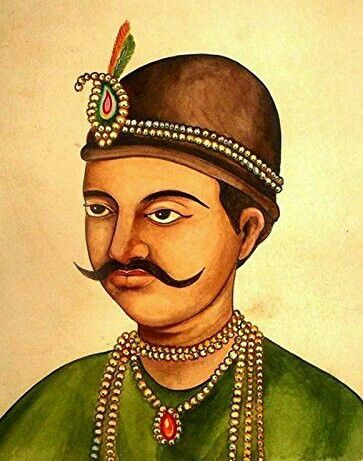
After the British retook Cawnpore, they stormed Nana Sahib’s palace in Bithoor. Amid the chaos, they found a unique ceremonial cap—square at the base, rounded at the top, made of fine silk and green velvet. Decorated with gold thread and glittering sequins, it was a mark of Nana Sahib’s royal identity.
Captain Lukis and the Cap’s Significance
The cap bore a handwritten label: “The Nana Sahib’s Cap. Found in his Palace at Bithoor near Cawnpore.” On the reverse, it said: “Captain Lukis. Guernsey.” This officer was among the first British soldiers to enter the palace after the Bibighar incident. Today, that cap stands as a silent witness to history.
The Mysterious Disappearance of
Last Known Sightings
After the fall of Cawnpore, Nana Sahib vanished. There were no confirmed reports of his capture or death. Some say he fled with a handful of loyal followers into the forests and mountains, leaving no trace behind.
Theories Around His Vanishing
Escaped to Nepal
The most accepted theory is that he fled north toward Nepal, possibly seeking asylum from the King of Nepal. British officials tried negotiating with Nepal to surrender him, but to no avail. He was never handed over.
Lived in Hiding in the Himalayas
Another theory suggests that he lived in the Himalayan foothills in disguise, far away from British eyes. His supporters may have protected him, treating him like a living legend, a phantom of rebellion.
Assumed a New Identity
Some tales even claim he adopted a new identity and lived out his days as a hermit or commoner. A few believe he lived well into the 1880s, wandering across north India.

The Symbolism of the Cap
A Testament to Resistance
The cap found in his palace isn’t just a piece of clothing—it’s a symbol. It reflects Nana Sahib’s royal pride, his resistance, and the cultural identity that stood firm in the face of imperial power.
Display and Legacy
Today, this cap is preserved in British collections, occasionally displayed as a historical relic. It represents not just a man, but an entire movement—a failed yet fierce cry for independence.
Legacy of Today
Viewed as a Hero or a Villain?
In British records, Nana Sahib is often remembered as a butcher, especially because of Bibighar. But in India, he’s a hero, a freedom fighter who refused to kneel. Like many revolutionaries, his legacy is dual-sided—vilified by colonizers, glorified by the oppressed.
Remembering Him in Indian History
Indian historians and freedom movement chroniclers remember him fondly. Streets, parks, and institutions bear his name. In Kanpur and Bithoor, his legend still lives in stories, monuments, and memory.
Conclusion
remains one of the most enigmatic figures of the Indian Rebellion of 1857. A prince turned rebel, a friend turned foe, and eventually a man who disappeared without a trace. His story is one of pride, betrayal, and resistance. The mystery of his vanishing still intrigues historians and enthusiasts alike. And while the British may have claimed victory in battle, Nana Sahib’s defiance echoes through time—proof that even when a warrior disappears, his spirit does not.

FAQs
Q1. Where was last seen?
He was reportedly last seen near the Nepal border, but his exact fate remains a mystery.
Q2. Was responsible for the Bibighar Massacre?
There’s no solid proof of his direct orders, but he was in command during the incident.
Q3. Is considered a freedom fighter in India?
Yes, despite British vilification, he is remembered as a brave leader in India’s fight for independence.
Q4. What happened to cap?
The cap was recovered from his palace and is preserved as a historical artifact, symbolizing his royal status and rebellion.
Q5. Are there places named after today?
Yes, several roads, parks, and public institutions in India honor his name and legacy.
| Anchor Text | URL | Description |
|---|---|---|
| Nana Sahib – Britannica | https://www.britannica.com/biography/Nana-Sahib | A comprehensive biography of Nana Sahib from Encyclopædia Britannica. |
| Indian Rebellion of 1857 – Wikipedia | https://en.wikipedia.org/wiki/Indian_Rebellion_of_1857 | Detailed article on the events and figures of the 1857 revolt. |
| Bibighar Massacre – British Library | https://www.bl.uk/collection-items/bibighar-massacre | A historical overview of the Bibighar massacre and related artifacts. |
| History of Bithoor – UP Tourism | https://uptourism.gov.in/en/post/bithoor | Information about Bithoor’s historical significance and Nana Sahib’s residence. |
| The Disappearance of Nana Sahib – JSTOR | https://www.jstor.org/stable/44144424 | Scholarly article analyzing the theories about Nana Sahib’s disappearance. (May require access) |
| Revolt of 1857 – National Archives of India | https://nationalarchives.nic.in/revolt-1857 | Archival records and primary sources related to the First War of Independence. |
| Nana Sahib’s Cap – Royal Collection Trust | https://www.rct.uk/collection/themes/exhibitions/nana-sahibs-cap | Information about the cap found in Nana Sahib’s palace. (If applicable) |