
Table 1: Article Outline
Table of Contents
| Heading Level | Section Title |
|---|---|
| H1 | 7 Powerful & Incredible Facts About Gandaberunda: The Mythical Symbol of Ultimate Strength |
| H2 | Introduction to Mythological Symbols in India |
| H2 | The Story Behind Gandaberunda |
| H3 | Who Was Hiranyakashipu? |
| H3 | Narasimha’s Fierce Avatar |
| H2 | The Rise of Chaos |
| H3 | Why Narasimha Could Not Be Controlled |
| H4 | Threat to the Universe |
| H2 | The Arrival of Sharabha |
| H3 | Shiva’s Fierce Transformation |
| H4 | The Form and Power of Sharabha |
| H2 | The Ultimate Transformation |
| H3 | Vishnu Becomes Gandaberunda |
| H4 | The Two-Headed Bird Symbolism |
| H2 | The Great Battle |
| H3 | Gandaberunda vs Sharabha |
| H4 | Restoration of Cosmic Balance |
| H2 | Symbolism of Gandaberunda |
| H3 | Power, Protection, and Duality |
| H4 | Spiritual Meaning |
| H2 | Gandaberunda in Karnataka Culture |
| H3 | State Emblem Significance |
| H2 | Gandaberunda in Jewellery |
| H3 | Meaning Behind the Pendant |
| H4 | Modern Popularity |
| H2 | Conclusion |
| H2 | FAQs |
Table 2: Article
| Article |
|---|
| # 7 Powerful & Incredible Facts About Gandaberunda: The Mythical Symbol of Ultimate Strength |

Introduction to Mythological Symbols in India
India’s mythology is like a treasure chest—every time you open it, you discover something more fascinating than before. From gods to mythical creatures, each story carries deep meaning and symbolism.
But among all these legends, there’s one creature that stands out—not just for its power, but for what it represents.
Meet Gandaberunda—a mythical two-headed bird symbolizing ultimate strength, balance, and protection.
Sounds intense? Wait till you hear the full story.
The Story Behind Gandaberunda
Every powerful symbol has a powerful origin story—and Gandaberunda’s story begins with chaos.
Who Was Hiranyakashipu?
Hiranyakashipu was a demon king who believed he was invincible. His arrogance grew so strong that he challenged even the gods.
But every story of ego eventually meets its downfall.
Narasimha’s Fierce Avatar
To defeat him, Vishnu took the form of Narasimha—half lion, half human.
This form was raw, powerful, and unstoppable.
And yes, Hiranyakashipu was defeated.
But here’s the twist…
The Rise of Chaos
Victory didn’t bring peace.
Instead, it brought destruction.
Why Narasimha Could Not Be Controlled
After the battle, Narasimha’s anger didn’t fade. It intensified.
Imagine a storm that refuses to calm down—that was Narasimha.

Threat to the Universe
His uncontrollable rage began to threaten the balance of the entire universe.
And that’s when things took a dramatic turn.
The Arrival of Sharabha
When chaos rises, balance must follow.
Shiva’s Fierce Transformation
To control Narasimha, Shiva took on a terrifying form—Sharabha.
This wasn’t just any form.
It was designed to overpower even the most destructive forces.
The Form and Power of Sharabha
Sharabha was an eight-legged creature, part lion and part bird.
It symbolized control, dominance, and divine intervention.

The Ultimate Transformation
But the story doesn’t end there.
Vishnu Becomes
To counter Sharabha, Vishnu transformed again—this time into .
A massive, two-headed bird with unimaginable power.
The Two-Headed Bird Symbolism
Why two heads?
Because represents dual power—the ability to see, think, and act in multiple dimensions at once.
It’s like having double the strength and double the awareness.
The Great Battle
Now comes the climax.
vs Sharabha
Two of the most powerful forms in mythology faced each other.
It wasn’t just a fight—it was a clash of cosmic energies.
Restoration of Cosmic Balance
In the end, emerged victorious.
And with that, balance was restored.
Symbolism of
This isn’t just a story—it’s a symbol.
Power, Protection, and Duality
Gandaberunda stands for:
- Strength beyond limits
- Protection from negative forces
- Balance between opposing energies
Spiritual Meaning
It reminds us that even chaos has a purpose—and balance will always find its way back.
in Karnataka Culture
Fast forward to today, and this mythical creature still holds importance.
State Emblem Significance
Gandaberunda is the official symbol of Karnataka.
It represents power, pride, and resilience.
in Jewellery
Mythology meets fashion here.
Meaning Behind the Pendant
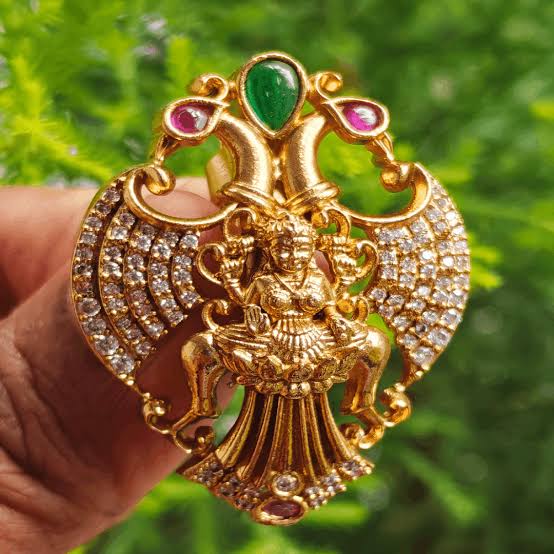
Gandaberunda pendants are not just accessories.
They are worn as symbols of protection and strength.
Modern Popularity
Today, people wear them as:
- Spiritual protection
- Cultural identity
- Statement jewellery
It’s like carrying a piece of mythology with you.
Conclusion
is more than just a mythical creature—it’s a reminder of balance, power, and transformation.
From ancient legends to modern jewellery, its presence continues to inspire.
So next time you see that two-headed bird symbol, remember—you’re looking at one of the most powerful icons in Indian mythology.
FAQs
1. What is ?
It is a mythical two-headed bird symbolizing power and protection.
2. Who created ?
It is believed to be an avatar of Vishnu in mythology.
3. What does Gandaberunda represent?
It represents strength, balance, and dual power.
4. Why is Gandaberunda important in Karnataka?
It is the official state symbol representing pride and resilience.
5. Is Gandaberunda jewellery popular today?
Yes, it is widely worn as a symbol of protection and cultural identity.
Gandaberunda Pendant Traditional Jewellery Image
| Anchor Text | External Link |
|---|---|
| Gandaberunda: Mythology and Symbolism Explained | https://en.wikipedia.org/wiki/Gandabherunda |
| Narasimha Avatar and Its Significance | https://www.britannica.com/topic/Narasimha |
| Story of Sharabha in Hindu Mythology | https://www.wisdomlib.org/hinduism/book/shiva-purana-english/d/doc226408.html |
| Karnataka State Emblem and Meaning | https://karnataka.gov.in/about/Pages/state-emblem.aspx |
| Symbolism of Mythical Birds in Indian Culture | https://www.sahapedia.org/mythical-birds-indian-art-and-culture |