
Table 1: Article Outline
Table of Contents
| Heading Level | Section Title |
|---|---|
| H1 | Arapatta: The Regal South Indian Waist Belt That Defines Kerala Bridal Elegance |
| H2 | Introduction to Arapatta |
| H2 | Cultural Importance of Arapatta in South India |
| H3 | Symbol of Prosperity and Divine Blessings |
| H3 | Why Kerala Brides Love Arapatta |
| H2 | Historical Origins of Arapatta |
| H3 | Evolution Through Temple Jewellery Traditions |
| H4 | Influence of Ancient South Indian Kingdoms |
| H2 | Design and Craftsmanship of Arapatta |
| H3 | Traditional Goldsmith Techniques |
| H4 | Melting and Moulding Pure Gold |
| H4 | Hand Engraving of Temple Motifs |
| H4 | Final Assembly and Polishing |
| H2 | Iconic Motifs Found in Arapatta |
| H3 | Lakshmi Motifs |
| H3 | Floral and Nature Inspired Patterns |
| H3 | Temple Architecture Elements |
| H2 | Materials Used in Making Arapatta |
| H3 | Gold as the Primary Material |
| H3 | Gemstones and Decorative Elements |
| H2 | Arapatta in Kerala Bridal Fashion |
| H3 | Styling with Kasavu Saree |
| H3 | Styling with Kanjeevaram Saree |
| H2 | Time Required to Craft a Traditional Arapatta |
| H2 | Modern Adaptations of Arapatta |
| H3 | Lightweight Versions |
| H3 | Contemporary Bridal Styling |
| H2 | Arapatta in Celebrity and Pop Culture |
| H2 | How to Identify an Authentic Arapatta |
| H2 | Care and Maintenance of Arapatta |
| H2 | Why Arapatta Remains Timeless |
| H2 | Conclusion |
| H2 | FAQs |
Table 2: Article
| Article |
|---|
| Arapatta: The Regal South Indian Waist Belt That Defines Kerala Bridal Elegance |
| Introduction to Arapatta |
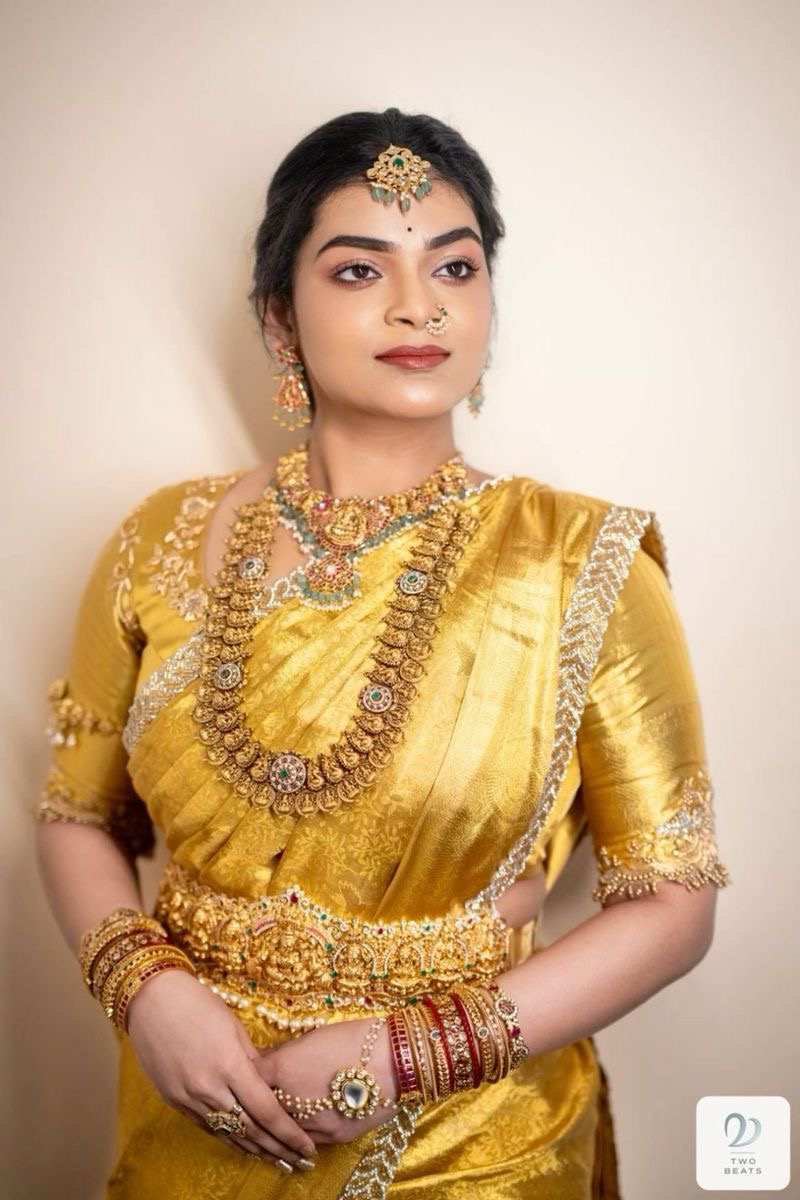
Arapatta is one of the most regal and elegant ornaments in South Indian bridal jewellery. This traditional waist belt is especially popular among brides in Kerala, where it is worn with the graceful Kasavu saree or luxurious Kanjeevaram silk saree. The ornament sits beautifully around the waist and enhances the overall bridal silhouette, giving the bride a royal and refined appearance. More than just an accessory, Arapatta reflects the rich cultural heritage of South India and the deep emotional connection people have with traditional jewellery. Its intricate craftsmanship, symbolic motifs, and radiant gold finish make it a centerpiece of bridal adornment.
| Cultural Importance of Arapatta in South India |
Jewellery in Indian culture has always carried meanings beyond beauty, and Arapatta is a perfect example of this tradition. In South India, the waist belt represents prosperity, femininity, and marital blessings. When a bride wears Arapatta, it is believed to invite good fortune and happiness into her married life. The ornament also symbolizes the wealth and status of the family, which is why it is often included as part of bridal heirloom jewellery. Many families pass down Arapatta pieces through generations, turning them into treasured symbols of heritage. Apart from its symbolic meaning, the belt also serves a practical purpose by keeping the saree pleats secure while enhancing the graceful posture of the bride.
| Symbol of Prosperity and Divine Blessings |
In traditional South Indian belief systems, gold jewellery is closely associated with divine energy and prosperity. Arapatta often features motifs of Goddess Lakshmi, the deity of wealth and abundance, making it an auspicious ornament for weddings. Wearing this waist belt is considered a way to invite blessings, good fortune, and harmony into the bride’s life.
| Why Kerala Brides Love Arapatta |
Kerala brides adore Arapatta because it perfectly complements their traditional attire. When worn with a Kasavu saree, the golden belt highlights the elegance of the white fabric and enhances the bride’s silhouette. The ornament also creates a sense of balance in the bridal look by connecting the upper jewellery pieces with the lower drape of the saree.
| Historical Origins of Arapatta |

The origins of Arapatta can be traced back to ancient South Indian traditions where waist ornaments were worn by royal women, temple dancers, and aristocrats. These belts were considered symbols of status and dignity. Over time, the design evolved and became an essential element of bridal jewellery in Kerala.
| Evolution Through Temple Jewellery Traditions |
Temple jewellery played a major role in shaping the design aesthetics of Arapatta. These ornaments were originally created to decorate idols in temples, featuring sacred motifs and intricate carvings. Later, the same artistic style was adopted for bridal jewellery, giving Arapatta its iconic temple-inspired look.
| Influence of Ancient South Indian Kingdoms |
Ancient dynasties such as the Cholas, Cheras, and Pandyas greatly influenced the development of South Indian jewellery. Their royal courts encouraged highly skilled artisans to create elaborate ornaments that symbolized power and cultural richness. The design philosophy behind Arapatta reflects this royal heritage.
| Design and Craftsmanship of |
Crafting an requires exceptional skill and patience. Each piece is handcrafted by experienced goldsmiths who carefully follow traditional jewellery-making techniques that have been passed down for generations.
| Traditional Goldsmith Techniques |
The process of creating an involves several intricate steps, each requiring precision and expertise. Skilled artisans spend days shaping the metal, engraving motifs, and assembling delicate components.
| Melting and Moulding Pure Gold |
The process begins with melting pure gold at high temperatures. The molten gold is then shaped into thin plates or strips that form the base structure of the waist belt.
| Hand Engraving of Temple Motifs |
After the base structure is created, artisans engrave intricate patterns onto the gold surface. These motifs often include images of Goddess Lakshmi, lotus flowers, peacocks, and other traditional symbols.
| Final Assembly and Polishing |
Once the individual components are ready, they are carefully assembled into the final belt structure. The ornament is then polished to achieve a smooth and radiant finish.
| Iconic Motifs Found in Arapatta |
One of the most captivating aspects of is the variety of symbolic motifs used in its design.
| Lakshmi Motifs |
Images of Goddess Lakshmi are commonly featured in designs because she represents wealth, prosperity, and divine blessings.
| Floral and Nature Inspired Patterns |
Nature-inspired designs such as lotus flowers, vines, and leaf patterns add elegance and softness to the ornament.
| Temple Architecture Elements |
Some designs incorporate patterns inspired by temple carvings, creating a majestic and sacred aesthetic.
| Materials Used in Making |
While gold is the primary material, additional decorative elements are sometimes used to enhance the beauty of the belt.
| Gold as the Primary Material |
Traditional belts are usually crafted from 22-karat gold, which gives them durability and a rich golden hue.
| Gemstones and Decorative Elements |
Certain designs also include gemstones such as rubies, emeralds, or pearls to create a more luxurious appearance.
| in Kerala Bridal Fashion |
In Kerala bridal styling, plays an important role in completing the wedding look.
| Styling with Kasavu Saree |
When paired with the elegant Kasavu saree, Arapatta creates a timeless bridal look that highlights the simplicity and beauty of Kerala tradition.
| Styling with Kanjeevaram Saree |
When worn with a Kanjeevaram silk saree, the waist belt enhances the richness of the fabric and adds a royal touch.
| Time Required to Craft a Traditional |
Creating a handcrafted Arapatta can take anywhere from a few days to three weeks depending on the complexity of the design.
| Modern Adaptations of |
While traditional designs remain popular, modern jewellery designers have introduced lighter and more versatile versions of the waist belt.
| Lightweight Versions |
Modern belts are often designed to be lighter so they can be worn comfortably for long hours.
| Contemporary Bridal Styling |
Today, some brides also style with lehengas or fusion outfits, showing how adaptable the ornament has become.
| in Celebrity and Pop Culture |
The influence of films and celebrity weddings has also contributed to the popularity of Arapatta. When actresses and public figures showcase traditional jewellery in their bridal looks, it inspires many brides to embrace these timeless ornaments.
| How to Identify an Authentic |
Authentic pieces usually feature detailed hand engraving, high-quality gold, and precise craftsmanship. Checking for gold purity and hallmark certification is important when purchasing this ornament.
| Care and Maintenance of |
Proper care ensures the longevity of the jewellery. Storing it in a soft pouch, avoiding exposure to chemicals, and cleaning it gently will help maintain its shine for years.
| Why Remains Timeless |
Despite changing fashion trends, continues to remain a beloved bridal ornament. Its deep cultural symbolism and extraordinary craftsmanship make it a timeless treasure in South Indian jewellery.
| Conclusion |
beautifully represents the elegance, heritage, and spiritual symbolism of South Indian bridal jewellery. From its temple-inspired motifs to its intricate handcrafted details, every aspect of this waist belt tells a story of tradition and artistry. Whether worn with a Kasavu saree or a Kanjeevaram silk ensemble, Arapatta adds unmatched grace and royal charm to a bride’s appearance. As generations continue to celebrate their cultural heritage, this magnificent ornament remains a timeless symbol of beauty and prosperity.
| FAQs |
What is in South Indian jewellery?
is a traditional gold waist belt worn by South Indian brides, particularly in Kerala, as part of their bridal jewellery.
Why is important in Kerala weddings?
It symbolizes prosperity, divine blessings, and enhances the elegance of the bridal saree.
How long does it take to make an ?
Depending on the design complexity, crafting an may take from a few days to three weeks.
What motifs are commonly used in designs?
Common motifs include Goddess Lakshmi, lotus flowers, peacocks, and temple-inspired patterns.
Can be worn with modern outfits?
Yes, modern brides sometimes style with lehengas and fusion outfits while maintaining its traditional charm.

Arapatta Traditional Kerala Bridal Waist Belt
| Anchor Text | External Link |
|---|---|
| History of Temple Jewellery in South India | https://www.thehindu.com/life-and-style/fashion/the-history-of-temple-jewellery/article |
| Traditional Jewellery of Kerala | https://www.culturalindia.net/jewellery/kerala-jewellery.html |
| Significance of Gold in Indian Weddings | https://www.india.com/lifestyle/importance-of-gold-in-indian-weddings- |
| Kerala Bridal Jewellery Traditions | https://www.keralatourism.org/artforms/kerala-jewellery/ |
| History of South Indian Temple Jewellery | https://www.craftsvilla.com/blog/history-of-temple-jewellery/ |
| Traditional Gold Jewellery Craft of India | https://www.indianmirror.com/culture/jewellery/ |
| Role of Gold in Indian Culture | https://www.worldgoldcouncil.org/goldhub/research/gold-and-culture |
