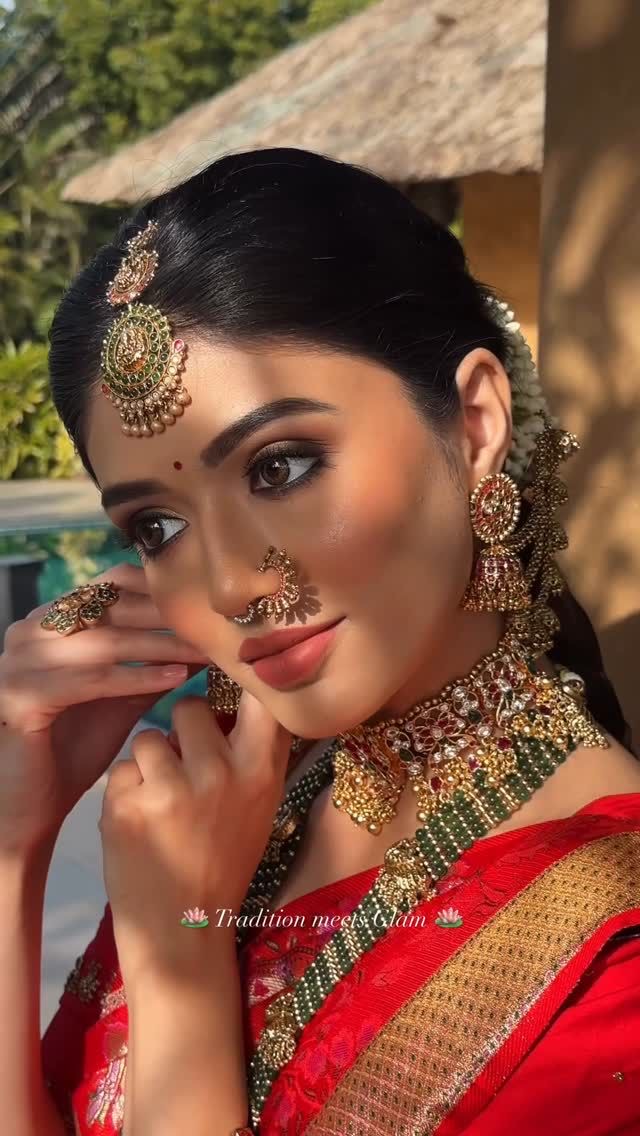
| H1: Mukkupudaka / Mookuthi: The Sacred Nose Ornament of Kerala and Tamil Tradition | Mukkupudaka, known as Mookuthi in Kerala and Tamil Nadu, is far more than a tiny nose ornament. It is a symbol of devotion, femininity, cultural identity, and timeless elegance. Rooted in temple traditions and associated with Goddess Bhagavathy, this delicate nose stud carries centuries of history, spirituality, and symbolism. From bridal adornment to everyday grace, the Mookuthi reflects the soul of South Indian heritage. |
| H2: Mukkupudaka Introduction to Mukkupudaka | Have you ever noticed how a tiny jewel can transform an entire face? That’s exactly what the Mukkupudaka does. Small yet powerful, this traditional nose ornament enhances beauty while carrying deep cultural and spiritual meaning. In Kerala, it is believed that even the goddess herself adorned it, making it sacred and auspicious. |
| H2:Mukkupudaka Mythological Origins: Goddess Bhagavathy and the Sacred Nose Ornament | The roots of the Mukkupudaka are intertwined with the worship of Goddess Bhagavathy, a fierce yet compassionate form of the Divine Mother revered across Kerala. |
| H3: Who is Goddess Bhagavathy? | Bhagavathy is considered a manifestation of Durga and Parvati, symbolizing power, protection, and prosperity. Temples dedicated to her are central to Kerala’s spiritual life, and her adornments inspire traditional jewelry worn by women. |
| H3: Divine Symbolism of the Nose Ornament | It is believed that Goddess Bhagavathy wore a nose ornament symbolizing divine beauty and feminine strength. Women began wearing the Mukkupudaka as a way to emulate the goddess and invite blessings into their lives. |
| H2: What is Mukkupudaka (Mookuthi)? | The Mukkupudaka is a small nose stud or ring traditionally worn on the nostril. Though minimal in size, it holds immense cultural depth. |
| H3: Meaning and Etymology | The word “Mookuthi” comes from Tamil and Malayalam roots: “Mooku” meaning nose and “uthi” meaning ornament. Together, it simply means “nose jewel.” |
| H3: Regional Names Across South India | In Kerala it is called Mukkupudaka or Mookuthi, in Tamil Nadu Mookuthi, in Karnataka it is known as “Mukkuthi,” and in other regions, it is simply referred to as a nose stud or Nath. |
| H2: Historical Evolution of Nose Ornaments in South India | Nose ornaments have been worn in India for centuries, but in South India they gained prominence through temple culture and royal patronage. |
| H3: Temple Traditions and Ritual Use | Women visiting temples traditionally wore gold ornaments as a mark of purity and devotion. The Mookuthi became a sacred accessory, symbolizing respect toward the divine. |
| H4: Influence of Dravidian Culture | Dravidian aesthetics emphasized symmetry and subtle beauty. The small, elegant nose stud perfectly aligned with these ideals. |
| H2: Design and Craftsmanship | Despite its size, the Mookuthi showcases remarkable craftsmanship. |
| H3: Materials Used | Traditionally made from pure gold, the Mookuthi represents purity and prosperity. Gold is considered auspicious and suitable for daily wear. |
| H3: Gemstones and Motifs | Some designs include pearls, rubies, or diamonds. Floral motifs, star shapes, and geometric patterns are common, reflecting nature and cosmic harmony. |
| H4: Minimal vs Ornate Styles | While some prefer simple gold studs, others choose elaborate designs for weddings and festivals. Think of it like choosing between a whisper and a song—both beautiful, just different expressions. |
| H2: Cultural Significance | The Mookuthi is not merely decorative—it tells a story about identity and tradition. |
| H3: Symbol of Femininity and Beauty | Wearing a nose ornament is seen as an enhancement of feminine grace. It frames the face and highlights natural features, much like a period at the end of a perfect sentence. |
| H3: Marker of Marital Status | In many communities, the nose stud signifies marriage and womanhood, similar to the mangalsutra or toe rings. |
| H2: Ayurvedic and Health Beliefs | Beyond aesthetics, Ayurveda associates nose piercing with health benefits. |
| H3: Left Nostril Piercing and Women’s Health | According to Ayurvedic beliefs, piercing the left nostril is linked to reproductive health and may ease childbirth and menstrual discomfort. |
| H3: Energy Channels and Ayurveda | The nose is believed to connect to energy channels in the body. Piercing certain points may help balance these energies, promoting overall well-being. |
| H2: Role in Weddings and Festivals | The Mookuthi plays a vital role in South Indian bridal attire. |
| H3: Bridal Traditions in Kerala | Kerala brides often wear a diamond or gold Mookuthi as part of their wedding ensemble, symbolizing purity, prosperity, and divine blessings. |
| H3: Temple Festivals and Ritual Wear | During festivals like temple utsavams, women adorn traditional jewelry including the Mookuthi to honor the goddess and celebrate heritage. |
| H2: Modern Adaptations | Like all traditions, the Mookuthi has evolved with time. |
| H3: Contemporary Jewelry Trends | Modern designs include minimalist diamonds, nose pins, and even detachable studs suited for daily wear. Young women pair them with both ethnic and Western outfits. |
| H3: Global Appeal | Today, nose studs inspired by the Mookuthi are worn worldwide, appreciated for their elegance and cultural depth. |
| H2: Why Mookuthi is More Than Just Jewelry | Think of the Mookuthi as a tiny heirloom resting on the face. It carries mythology, health beliefs, cultural identity, and personal expression—all in a single sparkle. |
| H2: Conclusion | The Mukkupudaka or Mookuthi is not just a small ornament—it is a symbol of devotion, beauty, health, and heritage. From its divine association with Goddess Bhagavathy to its role in weddings and modern fashion, this timeless nose jewel continues to connect generations of women to their roots. Whether worn for tradition, spirituality, or style, the Mookuthi proves that even the smallest adornments can carry the greatest stories. |
| H2: FAQs | Q1: What is the difference between Mukkupudaka and Mookuthi? \nBoth refer to the same traditional nose ornament; the name varies by region and language. \n\nQ2: Why is the left nostril commonly pierced? \nAyurveda links the left nostril to women’s reproductive health and pain relief during childbirth. \n\nQ3: Is Mookuthi only worn by married women? \nNo, unmarried women also wear it for beauty and cultural reasons, though in some communities it symbolizes marriage. \n\nQ4: What materials are used to make Mookuthi? \nTraditionally gold, often decorated with diamonds, pearls, or gemstones. \n\nQ5: Can Mookuthi be worn with modern outfits? \nAbsolutely! Its minimalist elegance makes it perfect for both traditional and contemporary fashion. |