
Table 1: Article Outline
Table of Contents
| Heading Level | Title |
|---|---|
| H1 | Manga Malai Necklace: The Timeless Jewel of South India |
| H2 | Welcome to Day 497: Celebrating a Cultural Icon |
| H2 | What Is a Manga Malai Necklace |
| H3 | Meaning of the Mango Motif |
| H4 | Mango as a Symbol of Love and Fertility |
| H2 | Historical Origins of Manga Malai |
| H3 | Connection to the Chola Period |
| H3 | Influence of Temple Art |
| H2 | Why Manga Malai Is Central to South Indian Culture |
| H3 | Role in Bridal Jewellery |
| H3 | Importance in Classical Dance |
| H2 | Traditional Craftsmanship Behind Manga Malai |
| H3 | Handcrafting Each Mango Link |
| H4 | Temple-Inspired Floral Carvings |
| H2 | Gemstones Used in Manga Malai |
| H3 | Diamonds, Rubies, and Emeralds |
| H3 | Cabochon Stones and Traditional Settings |
| H2 | Design Structure and Necklace Engineering |
| H3 | Flexibility, Balance, and Royal Finish |
| H2 | Manga Malai in Bharatanatyam and Classical Arts |
| H2 | Ritual, Spiritual, and Emotional Significance |
| H2 | Modern Adaptations of Manga Malai |
| H3 | Bridal vs Contemporary Styles |
| H2 | How to Style a Manga Malai Today |
| H2 | Caring for and Preserving a Manga Malai |
| H2 | Why Manga Malai Is More Than Just Jewellery |
| H2 | Conclusion |
| H2 | FAQs |
Table 2: Full Article
| Article |
|---|
| H1: Manga Malai Necklace: The Timeless Jewel of South India |
|---|
| H2: Welcome to Day 497: Celebrating a Cultural Icon |
| South India’s jewellery traditions are not just about beauty—they are about memory, mythology, and meaning. Welcome to Day 497, where we explore one such iconic ornament that has survived centuries of cultural evolution: the Malai necklace. Traditionally worn by brides and classical dancers, this necklace is a living tribute to South India’s rich artistic and spiritual legacy. |

| H2: What Is a Malai Necklace |
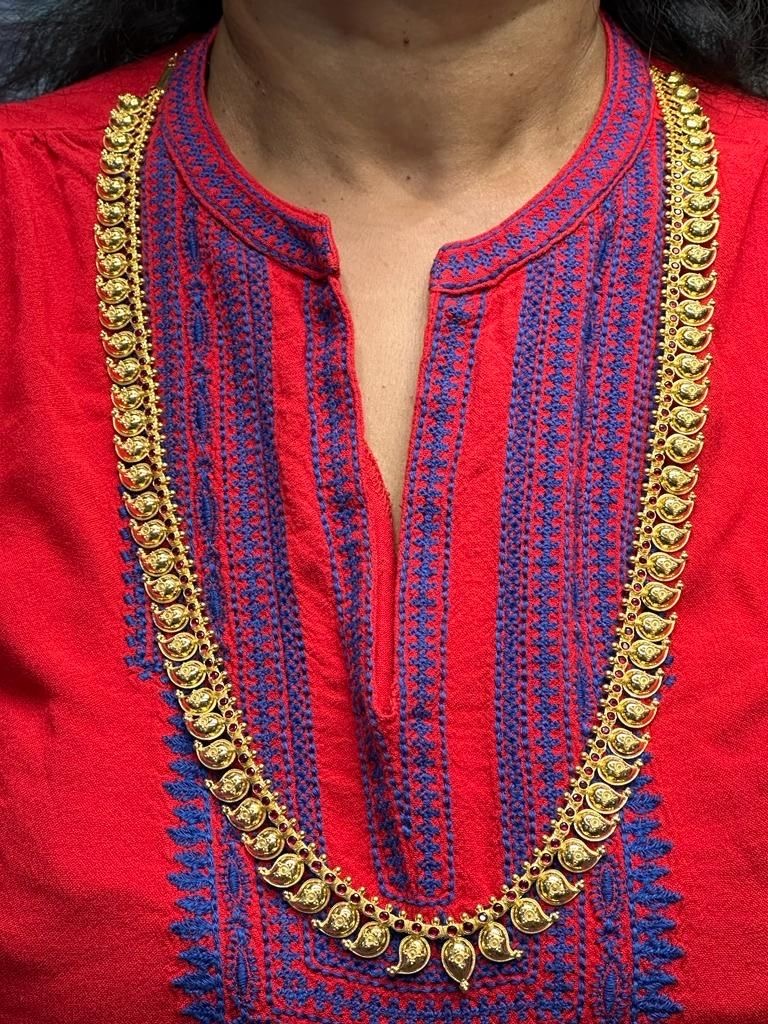
| A Malai is a traditional South Indian necklace crafted using repeated mango-shaped elements. The word “” means mango, and “malai” means garland. Together, the necklace resembles a garland of golden mangoes resting gracefully around the neck, radiating prosperity and auspiciousness. |
| H3: Meaning of the Mango Motif |
| In Indian symbolism, the mango is not just a fruit—it is a blessing. It represents abundance, fertility, sweetness in relationships, and continuity of life. That is why mango leaves are hung at doorways during festivals and weddings. |
| H4: Mango as a Symbol of Love and Fertility |
| For brides, the mango motif carries a deeply emotional message: the hope for a loving marriage, healthy offspring, and lifelong prosperity. Wearing a Manga Malai is like wearing a prayer crafted in gold. |
| H2: Historical Origins of Malai |
| The roots of the Manga Malai can be traced back to ancient South India, particularly during the Chola period and even earlier. These dynasties were patrons of temple art, sculpture, and fine jewellery. |
| H3: Connection to the Chola Period |
| Chola queens and temple dancers were often depicted wearing mango-shaped necklaces in stone carvings. These visual records confirm that Malai was considered a royal ornament, reserved for women of high cultural and social standing. |
| H3: Influence of Temple Art |
| The intricate carvings seen on Malai links directly mirror temple sculptures—lotus petals, creepers, divine motifs, and symmetrical geometry inspired by sacred architecture. |
| H2: Why Manga Malai Is Central to South Indian Culture |
| Manga Malai is not seasonal fashion—it is tradition frozen in gold. It appears across weddings, religious ceremonies, and classical performances, making it a cultural constant. |
| H3: Role in Bridal Jewellery |
| In South Indian weddings, especially Tamil and Telugu ceremonies, Manga Malai holds pride of place. It is often layered with other necklaces, forming the centerpiece of the bridal jewellery set. |
| H3: Importance in Classical Dance |
| Bharatanatyam dancers wear Malai to complete their traditional costume. Under stage lights, the necklace moves rhythmically, echoing the dancer’s expressions and storytelling. |
| H2: Traditional Craftsmanship Behind Manga Malai |
| Creating a Malai is a labor of devotion. Skilled goldsmiths begin by handcrafting each mango-shaped link individually using pure gold. |
| H3: Handcrafting Each Mango Link |
| No molds. No shortcuts. Each mango is shaped, refined, and polished by hand, ensuring uniqueness and precision. |
| H4: Temple-Inspired Floral Carvings |
| Floral engravings are carved onto each link, often inspired by temple pillars and sacred motifs, adding texture and spiritual depth. |

| H2: Gemstones Used in Manga Malai |
| Traditional Malai designs incorporate natural gemstones chosen for both beauty and symbolism. |
| H3: Diamonds, Rubies, and Emeralds |
| Rubies symbolize passion and power, emeralds signify growth and renewal, while diamonds represent purity and strength. |
| H3: Cabochon Stones and Traditional Settings |
| Stones are often set using traditional techniques that avoid excessive cutting, preserving the gem’s natural form and glow. |
| H2: Design Structure and Necklace Engineering |
| Despite its elaborate look, a Malai is designed to be flexible, balanced, and comfortable to wear for long hours. |
| H3: Flexibility, Balance, and Royal Finish |
| Each link is joined carefully so the necklace flows naturally along the neckline, creating a regal yet wearable silhouette. |
| H2: Malai in Bharatanatyam and Classical Arts |
| For dancers, Malai is not decoration—it is character. It enhances abhinaya, complements costumes, and connects performance to heritage. |
| H2: Ritual, Spiritual, and Emotional Significance |
| Beyond aesthetics, Manga Malai is believed to attract positive energy, prosperity, and divine blessings—especially when worn during sacred rituals. |
| H2: Modern Adaptations of Manga Malai |
| Today’s designers reinterpret Manga Malai in lighter weights and minimalist designs while preserving its soul. |
| H3: Bridal vs Contemporary Styles |
| Bridal versions remain grand and gemstone-rich, while modern styles cater to festive wear and heritage lovers seeking subtle elegance. |
| H2: How to Style a Malai Today |
| Pair it with silk sarees, temple jewellery sets, or even contemporary blouses for a fusion look rooted in tradition. |
| H2: Caring for and Preserving a Malai |
| Store it separately, avoid harsh chemicals, and clean gently. Think of it not as jewellery—but as an heirloom. |
| H2: Why Malai Is More Than Just Jewellery |
| Manga Malai is memory, art, ritual, and identity—woven together in gold. It carries stories from temples, weddings, and stages across centuries. |
| H2: Conclusion |
| The Manga Malai necklace is a shining example of how jewellery can transcend ornamentation and become cultural legacy. From Chola temples to modern bridal aisles, it continues to whisper stories of love, fertility, prosperity, and timeless beauty. |
| H2: FAQs |
| 1. Is Malai only worn by brides?
No, it is also worn by classical dancers and during festivals.
2. Why is the mango motif considered auspicious?
Because it symbolizes fertility, abundance, and positive beginnings.
3. Is Malai always made of gold?
Traditionally yes, though modern adaptations may use other materials.
4. Can Malai be worn with modern outfits?
Yes, especially contemporary lighter versions styled with silk or fusion wear.
5. Is Malai a good heirloom investment?
Absolutely. Its cultural value often exceeds its material worth.

