
Table 1: Article Outline
Table of Contents
| Heading Level | Heading |
|---|---|
| H1 | Malatada – The Traditional Brass Waist Chain of the Gandia Women of Odisha |
| H2 | Introduction to the Timeless Beauty of Malatada |
| H2 | Origin of Malatada: A Jewel Rooted in Southern Odisha |
| H3 | The Cultural Landscape of Nabarangpur |
| H3 | Who Are the Gandia Women? |
| H2 | What Exactly Is Malatada? |
| H3 | Meaning and Symbolism Behind the Waist Chain |
| H3 | Material and Craftsmanship |
| H4 | The Role of Non-Tribal Lohar Artisans |
| H2 | Historical Evolution of the Malatada |
| H3 | Influence of Southern Odisha’s Tribal & Non-Tribal Craft Culture |
| H3 | How the Design Has Transformed Over Generations |
| H2 | Significance of Malatada in Gandia Women’s Life |
| H3 | A Symbol of Grace and Identity |
| H3 | Rituals, Festivals, and Ceremonial Value |
| H2 | The Making of Malatada: A Step-by-Step Craft Journey |
| H3 | Tools Used by Lohar Artisans |
| H3 | Techniques of Brass Crafting |
| H4 | Heating and Shaping |
| H4 | Detailing and Finishing |
| H2 | Unique Features of the Malatada Waist Chain |
| H3 | Weight, Design, and Structure |
| H3 | The Charm of Ethnic Brass |
| H2 | Traditional Styling: How Gandia Women Wear Malatada |
| H3 | Pairing With Traditional Attire |
| H3 | Occasions Where Malatada Is Essential |
| H2 | Malatada in Modern Times |
| H3 | How the Younger Generation Views It Today |
| H3 | Demand in Urban and Handicraft Markets |
| H2 | Challenges Faced by Artisans and the Future of This Craft |
| H3 | Declining Artisan Communities |
| H3 | Need for Cultural Revival |
| H2 | Why Malatada Should Be Preserved as a Cultural Treasure |
| H2 | Conclusion |
| H2 | FAQs |
Table 2: Article
Malatada – The Traditional Brass Waist Chain of the Gandia Women of Odisha
Introduction to the Timeless Beauty of Malatada
Have you ever come across a piece of jewellery so unique that it instantly grabs your attention — not because it’s flashy, but because it carries an entire culture within its design? Malatada, the traditional brass waist chain worn by the Gandia women of Nabarangpur in Southern Odisha, is one such treasure.
More than an ornament, it is a representation of identity, womanhood, beauty, dignity, and social pride. Whether worn during weddings or joyful celebrations, Malatada shines around the waist like a badge of cultural honour.
Let’s dive into this captivating piece of Odia heritage.
Origin of Malatada: A Jewel Rooted in Southern Odisha
The Cultural Landscape of Nabarangpur
Nabarangpur, located in the heart of Southern Odisha, is known for its rich tribal and non-tribal cultural fusion. This region is home to various communities who preserve age-old traditions through jewellery, textiles, music, and rituals.
Who Are the Gandia Women?
The Gandia community is one of the culturally vibrant groups residing in Nabarangpur. Their traditional attire is incomplete without ethnic ornaments that reflect their proud cultural lineage. Among all their adornments, Malatada stands out as the most distinctive.
What Exactly Is Malatada?
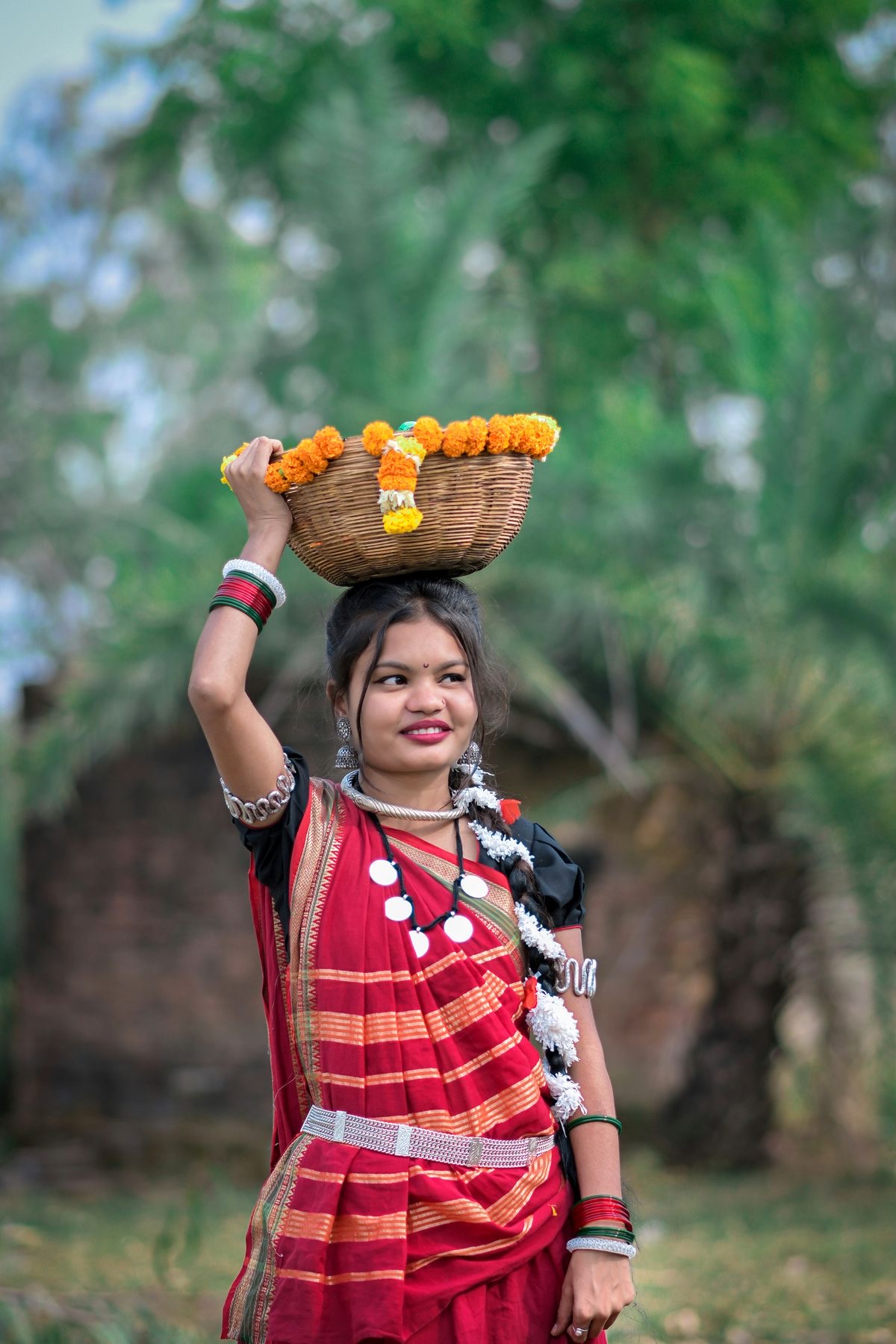
Malatada is an ethnic brass waist chain worn by Gandia women around their waist during festivals, weddings, and community celebrations.
Meaning and Symbolism Behind the Waist Chain
For Gandia women, is not just jewellery:
- It symbolizes grace and poise
- Represents cultural identity
- Marks womanhood and beauty
- Acts as a traditional marker of prosperity
Simply put, wearing is like carrying a piece of their heritage everywhere they go.
Material and Craftsmanship
The Role of Non-Tribal Lohar Artisans
Even though belongs to the Gandia community, it is crafted by non-tribal Lohar (blacksmith) artisans. Their expertise in shaping brass into intricate, smooth designs brings to life. These artisans:
- Heat brass strips
- Shape them by hand
- Carve delicate motifs
- Polish them to create a golden sheen
Their skill ensures that every Malatada is unique.
Historical Evolution of the
Influence of Southern Odisha’s Tribal & Non-Tribal Craft Culture
Odisha has long been celebrated for its metalwork. Regions like Nabarangpur and Koraput have centuries-old traditions of crafting brass and bell-metal ornaments. Over time, these local art forms blended with Gandia aesthetics to form the design we now know as .
How the Design Has Transformed Over Generations
Earlier, women wore heavier versions with thick chain links. But with changing trends:
- Designs have become lighter
- Patterns have grown more refined
- Some artisans add geometrical motifs or tiny bells
Despite these changes, the soul of the ornament remains unchanged.
Significance of in Gandia Women’s Life
A Symbol of Grace and Identity
To the Gandia community, is more than jewellery—it is a declaration of who they are. When worn, it enhances posture, confidence, and cultural expression.
Rituals, Festivals, and Ceremonial Value
You’ll spot during:
- Weddings
- Harvest festivals
- Community gatherings
- Traditional dances
- Religious ceremonies
During weddings, especially, holds emotional value. It is often passed down from mother to daughter as a cherished heirloom.
The Making of : A Step-by-Step Craft
Let’s take a closer look at how artisans transform raw brass into this stunning waist chain.
Tools Used by Lohar Artisans
- Hammer
- Anvil
- Blowtorch or furnace
- Cutting tools
- Pliers
- Files and polishers
Techniques of Brass Crafting
Heating and Shaping
The brass is first heated until it becomes flexible. The artisan then bends and shapes it into chain links or smooth bands depending on the design.
Detailing and Finishing
Once shaped:
- Edges are smoothed
- Surfaces are polished
- Motifs may be added
- Hooks are crafted by hand
Every step requires patience, precision, and a deep understanding of metal behaviour.
Unique Features of the Waist Chain
Weight, Design, and Structure
A typical is:
- Lightweight enough for daily comfort
- Strong enough to last for years
- Designed with ethnic patterns that reflect local aesthetics

The Charm of Ethnic Brass
The golden-brown shine of brass gives :
- A rustic appeal
- A traditional elegance
- A warm, earthy tone that pairs beautifully with traditional outfits
Traditional Styling: How Gandia Women Wear
Pairing With Traditional Attire
Gandia women usually pair with:
- Handwoven sarees
- Traditional blouses
- Beaded necklaces
- Silver and brass bangles
This combination reflects the harmony of tribal and non-tribal aesthetics found throughout Southern Odisha.
Occasions Where Is Essential
Whether it’s dancing in community festivals or performing rituals, always finds its place in the ensemble.
in Modern Times
How the Younger Generation Views It Today
You might think younger generations shy away from traditional ornaments, but surprisingly, is still cherished. Many young women wear it during cultural functions or pre-wedding photoshoots.
Demand in Urban and Handicraft Markets
Malatada is slowly gaining popularity outside Odisha too. Urban buyers appreciate:
- Its ethnic appeal
- Handmade craftsmanship
- Cultural heritage value
It’s even becoming a part of fusion fashion trends.
Challenges Faced by Artisans and the Future of This Craft
Declining Artisan Communities
Fewer young artisans are choosing to continue the craft due to:
- Low earnings
- Lack of recognition
- Cheaper machine-made alternatives
Need for Cultural Revival
To preserve , we must:
- Support local artisans
- Promote handcrafted jewellery
- Create awareness of Odisha’s traditional crafts
- Include in cultural exhibitions and fashion events
Why Should Be Preserved as a Cultural Treasure
isn’t just jewellery—it’s a story. A story of women, artisans, culture, and identity. Preserving it means preserving:
- The craft
- The culture
- The heritage
- And the emotional value that comes with it
This waist chain is a symbol of pride that deserves global recognition.
Conclusion
The waist chain of the Gandia women is an exceptional piece of Odisha’s cultural identity. Rooted in tradition, crafted with love, and cherished across generations, it represents the beauty and dignity of Southern Odisha’s heritage. As modern trends evolve, continues to stand strong — a shining reminder of the artistry and cultural richness the region holds.
By supporting artisans and embracing handmade ethnic jewellery, we help ensure that treasures like are celebrated, preserved, and passed on to future generations.
FAQs
1. What is Malatada?
Malatada is a traditional brass waist chain worn by Gandia women of Nabarangpur, Southern Odisha.
2. Who makes Malatada?
Non-tribal Lohar artisans craft Malatada using age-old metalworking techniques.
3. Is Malatada worn only during weddings?
No, it is also worn during festivals, ceremonies, and cultural celebrations.
4. What is Malatada made of?
It is made of brass, known for its golden shine and durability.
5. Can Malatada be worn with modern outfits?
Yes! Many people pair it with ethnic fusion wear for a unique, cultural look.

| Website / Topic | External Link |
|---|---|
| Odisha Tourism (Official) | Visit Site |
| Ministry of Tribal Affairs – Tribes of India | Visit Site |
| Craft Council of India – Handicrafts | Visit Site |
| India Handmade – Govt. Marketplace | Visit Site |
| Odisha Culture – Wikipedia | Read More |
| Tribal Jewellery of India – JSTOR Article | Open Article |
| Incredible India – Odisha | Explore |
| UNESCO Intangible Cultural Heritage | Visit UNESCO |
