
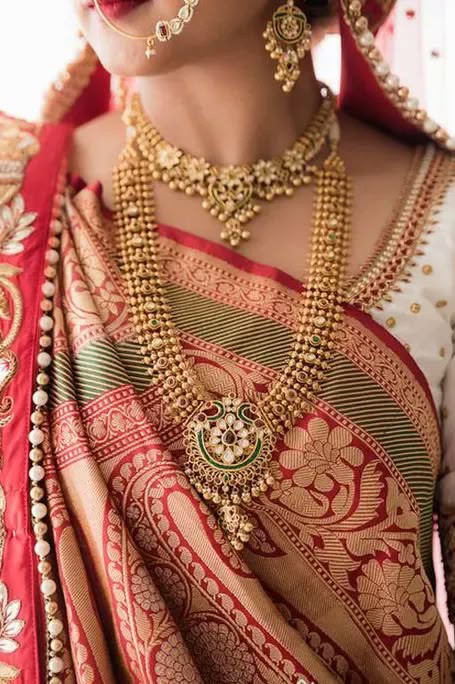
Every culture has its own signature jewelry that tells stories of tradition, love, and heritage. In the grand canvas of Indian bridal jewelry, the Chandan Haar holds a special place, especially in Gujarati and Marwari communities. It’s not just an accessory—it’s a symbol of prosperity, family legacy, and spiritual blessings wrapped in gold.
So, what makes this necklace so unique? Let’s explore the artistry, emotion, and meaning behind the magnificent Chandan Haar.
What is a Chandan Haar?
Historical Background
The Chandan Haar has been a cherished adornment for generations. Rooted deeply in the traditions of Gujarat and Rajasthan, this necklace represents more than just aesthetic appeal—it’s a cultural artifact passed from mothers to daughters, carrying stories of generations.
Meaning Behind the Name
The name ‘Chandan’ (meaning sandalwood) comes from the necklace’s intricate design that resembles the delicate pattern of a sandalwood mala. It symbolizes purity, peace, and divine blessings—making it a meaningful piece to wear during life’s most sacred ceremonies.

Design & Craftsmanship of Chandan Haar
Multi-Layered Beauty
A true Chandan Haar is a multi-layered necklace, cascading down the bride’s neckline in a grand, luxurious fashion. It’s designed to command attention and reflect the richness of tradition.
Materials Used – Gold, Pearls, Kundan, and Meenakari
Crafted mainly from 22k gold, the necklace may also include:
- Kundan stones for that royal Mughal touch
- Pearls that add softness and purity
- Meenakari enamel work with vibrant colors
- Jadau elements that scream opulence
Each material adds a unique personality to the haar, making it a true masterpiece.
The Royal Touch – Pendants and Motifs
The necklace often features bold pendants and engraved floral or peacock motifs, adding depth and drama. These intricate pieces are like the crown jewels of the design, giving it a regal and divine presence.
Cultural Significance in Gujarati and Marwari Traditions
Symbol of Prosperity and Blessings
In both Gujarati and Marwari households, gifting a Chandan Haar during a wedding isn’t just customary—it’s auspicious. It’s seen as a blessing from elders, wishing the bride a life full of wealth, happiness, and harmony.
A Sacred Gift During Marriage
Often, the necklace is gifted by the bride’s maayka (parental home) or sasural (in-laws), signifying:
- A warm welcome into the new family
- A prayer for fertility and abundance
- A token of timeless love and acceptance

The Role of Chandan Haar in Bridal Attire
Complements Panetar and Gharchola Sarees
Gujarati brides traditionally wear Panetar (white-red silk saree) and Gharchola (a red saree with golden checks and bandhani work). The Chandan Haar beautifully complements these sarees, enhancing the bridal elegance.
The Complete Bridal Set – Earrings and Maang Tikka
To complete the bridal ensemble, matching accessories like:
- Dangling gold earrings
- Maang tikka (forehead ornament)
…are paired with the haar. Together, they create a head-to-toe royal look, fit for a queen.
Weight and Value of a Chandan Haar
Average Weight and Its Meaning
Typically, a Chandan Haar weighs 5 to 7 tola (50-70 grams). That’s not just a lot of gold—it’s a significant investment and a treasured asset passed down through generations.
Investment Value in Gold Jewelry
Beyond tradition, this necklace is also a smart financial investment. Gold appreciates over time, and the craftsmanship adds artisanal value. So, wearing it is like flaunting your family’s gold savings—in style!
Modern Interpretations and Trends
Fusion with Contemporary Styles
Today’s brides often want to blend tradition with trend. And guess what? Chandan Haar has evolved with time!
Designers now create lighter versions, detachable layers, and even choker-meets-long-haar styles. It keeps the essence intact while catering to modern tastes.
Celebrity and Influencer Impact
From wedding bloggers to Bollywood brides, many have revived the charm of traditional jewelry. Styled with lehengas or even indo-western gowns, the Chandan Haar is back in vogue—and how!

How to Choose the Perfect Chandan Haar
Matching with Sarees and Outfits
While buying or custom-making a Chandan Haar, keep these tips in mind:
- Match the motifs and colors with your saree embroidery
- Decide if you want a bold or subtle pendant
- Choose a length that suits your neckline and face shape
Factors to Consider Before Buying
Also, think about:
- The karat value of gold (preferably 22k)
- Hallmarked certification for authenticity
- Comfort, especially if you’ll wear it for long hours
- Compatibility with other bridal jewelry
Caring for Your Chandan Haar
Cleaning Tips
Avoid harsh chemicals. Use:
- A soft toothbrush and mild soapy water
- Or a jewelry cleaning cloth for daily maintenance
And definitely keep it away from hairsprays and perfumes.
Storage Advice
- Store it in a velvet-lined box
- Keep it separate to avoid scratches
- Add silica gel packs to absorb moisture
With proper care, your Chandan Haar can shine bright for generations.
Conclusion
The Chandan Haar is not just a piece of jewelry—it’s a heritage heirloom filled with emotions, tradition, and artistry. Whether worn with a classic Panetar saree or styled with a fusion outfit, it never fails to leave a lasting impression.
So, if you’re a bride-to-be or just someone who cherishes culture, the Chandan Haar is a must-have marvel—a timeless tale of elegance wrapped in gold.
FAQs
1. What is the significance of Chandan Haar in Gujarati weddings?
It represents prosperity, blessings, and is a vital part of the bridal trousseau, often gifted by family members to ensure a happy married life.
2. Can Chandan Haar be worn with modern outfits?
Absolutely! Modern brides often pair it with lehengas, gowns, or even fusion sarees for a royal yet contemporary vibe.
3. How much does a typical Chandan Haar weigh?
Usually between 5 to 7 tola, which equals about 50 to 70 grams of gold.
4. What materials are commonly used in Chandan Haar?
Gold is the base, but it’s often adorned with pearls, kundan, meenakari, and jadau work for added elegance.
5. Is Chandan Haar exclusive to Gujarati brides?
While it is most popular in Gujarati and Marwari communities, brides from other cultures are embracing it for its beauty and cultural charm.