
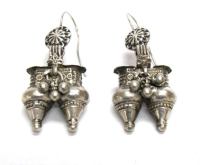
Gujarat is a state rich in culture, history, and traditions. Among the many exquisite pieces of jewelry that have been passed down through generations, Nagali Earrings stand out as a true symbol of Gujarat’s deep-rooted cultural identity. These unique earrings not only represent beauty but also tell the story of the communities who wear them, including the Rabari, Bharwad, Dhebaria, and Ahir tribes.
What Are Nagali Earrings?
Nagali Earrings are a traditional form of jewelry that originated in Gujarat, particularly in the Kutch and Saurashtra regions. These earrings are known for their distinctive coiled or spiral design, often inspired by the shapes found in nature, especially the coiled form of a snake (naga). The earrings are designed to create a loop, sometimes with additional projections resembling baskets where cotton can be placed, enhancing their visual appeal and fragrance.

The Design of Nagali Earrings
The Nagali Earrings’ design is intricate, featuring two shell-like structures that are joined by a central loop or a coiled wire. The coiled design draws direct inspiration from the natural spiral patterns found in snake forms, and it is said that this spiral is symbolic of both beauty and strength. In some variations of the design, basket-like projections are added, which can hold cotton soaked in perfume, giving the wearer a unique, pleasant fragrance—an element that is rare to find in jewelry today. These earrings are delicate yet bold in their design, serving as a statement piece in traditional attire.
Origins and Historical Significance of Nagali Earrings
Nagali Earrings have long been a part of Gujarat’s tribal heritage. The Rabari, Bharwad, Dhebaria, and Ahir communities wore them as part of their traditional attire, often passed down from generation to generation. Historically, the design of these earrings was not just a fashion statement but an essential part of the cultural and social identity of these tribes. Wearing Nagali earrings was a way for women to showcase their marital status, family heritage, and community belonging.
Cultural Importance of Nagali Earrings in Gujarat
These earrings hold significant cultural value, especially within the Rabari and Bharwad tribes, who were traditionally pastoral communities. The Nagali earrings were not just decorative; they were a sign of beauty, dignity, and respect. They also reflected the close relationship these communities had with nature and animals, with the spiral design symbolizing the ever-flowing and cyclical nature of life.
Regional Variations of Nagali Earrings
Though Nagali Earrings are most commonly associated with the Rabari, Ahir, and Bharwad communities in Gujarat, each group had its distinct style and variation. The size, design, and even the materials used differed slightly based on the tribe and their individual preferences. While some earrings were simple, others were heavy and detailed, showcasing the intricate craftsmanship and skill of the artisans who made them.

The Influence of Coiled Design: Inspiration from Nature
The coiled design of Nagali earrings is inspired by the spirals of a snake, which holds significant meaning in many cultures. The spiral symbolizes the cycle of life, death, and rebirth. In the context of these earrings, the coil represents continuity and strength—attributes that were highly valued by the communities that wore them.
Materials and Craftsmanship in Nagali Earrings
Traditionally, Nagali earrings were made from silver, though some heavier designs are crafted in gold or brass. The earrings are made by skilled artisans who specialize in metalworking. The craftsmanship involved in making Nagali earrings is detailed and time-consuming. The silver wire is meticulously shaped into the coiled and twisted patterns that define the earrings. Embellishments such as small pearls, beads, and cotton (used for fragrance) are often added to enhance the design and beauty of the earrings.
The Weight of Nagali Earrings
The weight of Nagali earrings varies, depending on the design. Some of the lighter designs weigh around 15 to 20 grams, while the more intricate, heavier designs can weigh anywhere from 85 to 100 grams. The heavier versions of these earrings were often worn for special occasions and were considered a luxury in many communities.
Light Designs vs Heavy Designs
In the lighter designs, the earrings are more minimalist, with a simpler spiral coil and fewer adornments. These were typically worn in daily life, adding a touch of elegance to the wearer’s attire. On the other hand, the heavier designs were considered ceremonial and were worn during significant cultural and religious events, signifying a more important role or status within the community.

The Role of Nagali Earrings in Modern-Day Gujarat
Nagali earrings were once a common sight in the rural areas of Gujarat, but as modernization has seeped into the state, the practice of wearing them has decreased. However, in tribal communities, they are still worn by many women as a part of their traditional attire, particularly in wedding ceremonies and other important social events.
The Shift in Tradition: Why Some Communities Stopped Wearing Nagali Earrings
In 2000, the Dhebaria Rabari community decided to no longer wear Nagali earrings. The community felt that while the earrings were an essential part of their heritage, it was important to adapt to changing times and social norms. They decided that the practice of wearing these earrings was no longer in line with their evolving cultural practices and that it could impact their future generations’ social mobility.
Interesting Facts About Nagali Earrings
- Fragrance in Jewelry: One of the most fascinating features of Nagali earrings is the ability to add cotton soaked in perfume inside the projections, giving a unique fragrance that lingers.
- Symbol of Marital Status: In many tribal cultures, wearing these earrings was a sign of marriage or community status.
- A Declining Tradition: Despite the rich history and significance, the use of Nagali earrings is slowly fading away, especially in the face of modern trends and jewelry.
Conclusion: Preserving the Legacy of Nagali Earrings
While Nagali earrings are becoming increasingly rare, they remain a symbol of Gujarat’s rich heritage and a testament to the craftsmanship of its tribal artisans. The spiral design, unique materials, and historical significance make these earrings more than just an accessory—they are a representation of a culture that is deeply rooted in nature, history, and identity.
FAQs:
- What are Nagali earrings made from?
Nagali earrings are traditionally made from silver, although some designs also use gold or brass. - Why are they called “Nagali” earrings?
The name “Nagali” comes from the spiral design that is reminiscent of the coiled form of a snake (naga). - How heavy are Nagali earrings?
The weight of Nagali earrings varies, with lighter designs weighing around 15 to 20 grams and heavier versions weighing 85 to 100 grams. - Why did the Dhebaria Rabari community stop wearing Nagali earrings?
In 2000, the Dhebaria Rabari community decided to stop wearing these earrings as part of a cultural shift to align with evolving social norms. - Where are Nagali earrings still worn today?
Nagali earrings are still worn by women in tribal communities in Gujarat, particularly during traditional ceremonies like weddings.