
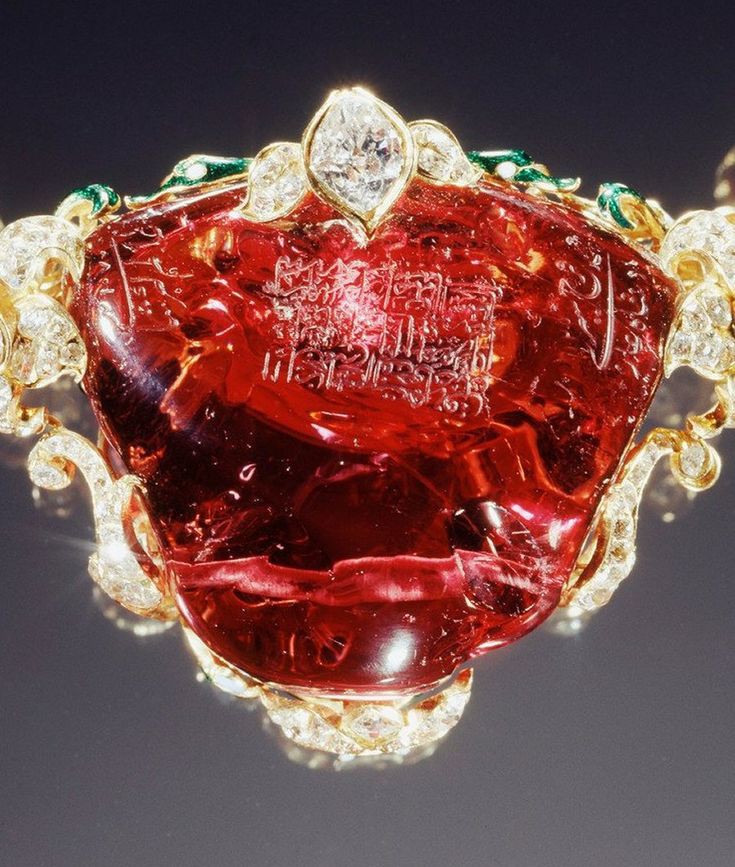
For centuries, rulers fought over it, blood was spilled, and it was considered a prized possession. But in 1857, a shocking truth surfaced – the famed Timur Ruby was never a real ruby! Instead, it was just a red spinel, a lesser-known gemstone often mistaken for a ruby in ancient times. So, was this one of the biggest scams in Delhi’s history? Let’s uncover the truth!

The Grand Heist: Timur’s Invasion of Delhi (1398)
Delhi, in 1398, was one of the wealthiest cities in the world. Gold, silver, and precious stones filled the markets and palaces. But this prosperity attracted the infamous Central Asian conqueror, Timur (Tamerlane).
The Bloodbath and Looting
Timur attacked Delhi with an unmatched brutality. His army massacred thousands, looted palaces, and left the city in ruins. Among the treasures he took back to Samarkand was a massive red gemstone – what would later be called the Timur Ruby.
The Journey of Timur Ruby Through the Ages
After Timur, the stone changed hands multiple times. When the Mughals conquered India, Babur brought it back, and it became a symbol of Mughal power.
Jahangir’s Inscription – A Mark of Pride
The ruby was so admired that Emperor Jahangir had it inscribed with his father Akbar’s name. When questioned, he proudly declared:
“This jewel will outlive any written history!”
Little did he know, the stone itself was a historical fraud!

The British Takeover & The Great Revelation (1857)
Fast forward to 1857, when the British took over Delhi after crushing the First War of Indian Independence. They looted the Red Fort, seizing treasures, including the Timur Ruby.
The Truth Uncovered
When British jewelers examined the ruby, they made a shocking discovery – it wasn’t a ruby at all! It was a red spinel, a different mineral that only looked like a ruby. The Mughals, and even Timur himself, had been fooled!
What is Red Spinel?
Many ancient rulers mistook Red Spinel for rubies. The difference is:
- Ruby: A precious corundum gemstone, extremely valuable.
- Spinel: A less expensive gemstone, often found alongside rubies.
So, while Timur thought he had stolen India’s greatest ruby, he had actually taken a much lesser stone!
Timur Ruby’s Role in British Royalty
Despite being a fake ruby, the British still placed Timur Ruby among the Crown Jewels of England. It remains part of the royal collection to this day, adding to its legacy of deception.
Should Timur Ruby Be Returned to India?

With growing demands for repatriation of stolen artifacts, many believe the Timur Ruby should be returned to India. Similar cases include:
- The Kohinoor Diamond, another treasure taken by the British.
- Egypt’s demand for the Rosetta Stone.
- Greece’s fight for the return of the Elgin Marbles.
The Biggest Scam in Delhi’s History?
For centuries, Timur Ruby was considered a priceless gem, but in reality, it was just an expensive mistake. This story raises the question – was this the biggest scam in Delhi’s history?
Conclusion
Timur invaded Delhi, Mughals took pride in it, and the British stole it – all for a gem that was never what it seemed. The irony? Even today, it shines in a foreign land, a symbol of history’s greatest deceptions.
Should it come back to India? You decide.
FAQs
1. Is Timur Ruby still in the British Crown Jewels?
Yes, Timur Ruby remains part of the British royal collection and is kept in a museum in London.
2. What is the value of Red Spinel today?
Although less valuable than rubies, high-quality red spinels can still fetch thousands of dollars per carat.
3. How did Mughals mistake it for a real ruby?
Ancient rulers lacked modern gemology tools and often relied on color to judge gemstones, leading to mistaken identities.
4. Has India ever demanded its return?
India has made several demands for the return of Kohinoor but hasn’t officially pursued Timur Ruby.
5. What are other famous stolen Indian jewels?
Besides Kohinoor, treasures like the Peacock Throne, Sultanganj Buddha, and many Mughal artifacts remain in British museums.