
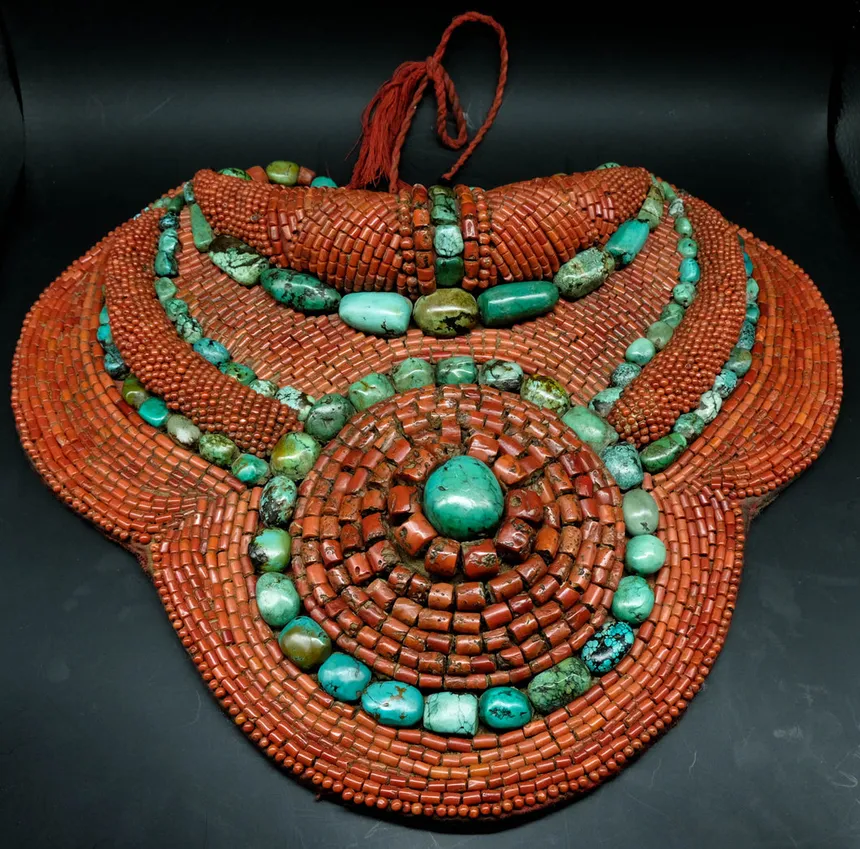
Introduction to Skeypuk
Ladakh, with its stunning landscapes and rich cultural heritage, is home to a treasure trove of unique traditions and crafts. Among these, the Skeypuk necklace stands out as an iconic piece of jewelry, deeply embedded in Ladakhi history and culture. But what exactly is Skeypuk? Why has it held such significance in Ladakhi society for centuries? In this article, we’ll explore the Skeypuk, its history, craftsmanship, and its place in Ladakhi tradition.

What is Skeypuk?
The word “Skeypuk” is derived from the Ladakhi language, where “Skey” refers to a neck or collar, and “Puk” means something that is worn. In essence, Skeypuk translates to “necklace” in English. However, the necklace isn’t just any accessory – it’s an essential part of Ladakhi cultural identity. Traditionally worn by women, particularly in the Sham Valley of Ladakh, this necklace carries deep cultural, historical, and symbolic significance.
Etymology of ‘Skeypuk’
The word “Skeypuk” comes from two distinct Ladakhi words: Skey, meaning “neck” or “gala”, and Puk, meaning “thing” or “object”. Thus, “Skeypuk” can be literally understood as “thing worn around the neck”. This simple etymology reflects the necklace’s role as a piece of jewelry designed specifically to adorn the neck, often signifying beauty, status, and cultural pride.
Historical Significance
The Royal Connection
The origins of Skeypuk trace back to a fascinating historical tale. According to local folklore, Skeypuk was initially created for a queen who suffered from goiter (a swelling of the thyroid gland), a condition that causes an abnormal bulge in the neck. This queen, whose identity remains unclear, required a special piece of jewelry to hide the unsightly swelling during royal functions and ceremonies. Thus, skilled artisans crafted the Skeypuk – a necklace designed to drape elegantly over the neck, not only to adorn but to conceal the medical condition.
This symbolic origin story turned the Skeypuk into an object of not just beauty, but also utility, and it became an important part of Ladakhi jewelry tradition.
Skeypuk and Goiter
The connection between Skeypuk and goiter highlights the practicality behind its design. In the harsh, mountainous regions of Ladakh, where goiter was not an uncommon condition due to iodine deficiency, wearing a Skeypuk allowed women to maintain their dignity while also showcasing their traditional jewelry. Over time, however, the necklace evolved beyond its practical purpose and became a symbol of status, beauty, and culture in Ladakhi society.
Design and Materials
Turquoise (Firoza)
One of the most striking features of a Skeypuk necklace is the use of turquoise (known locally as Firoza). This gemstone is a symbol of protection, prosperity, and health in many cultures, and in Ladakhi culture, it holds special significance. Turquoise is often set into the necklace to bring good luck and spiritual wellness to the wearer. Its vibrant blue-green color not only enhances the necklace’s aesthetic but also aligns with the natural beauty of Ladakh, where turquoise is found in abundance.
Silver (Chandi) in Skeypuk
Silver, or Chandi, is another key element in Skeypuk’s design. Silver is not just a precious metal, but it holds spiritual significance in Ladakhi traditions, believed to possess protective and healing qualities. The combination of turquoise and silver not only gives the necklace its characteristic beauty but also connects the wearer to the natural elements of the region.
Craftsmanship and Making Process
Handcrafting the Necklace
Creating a Skeypuk necklace is no simple task. The process begins with the careful selection of high-quality turquoise and silver. These materials are then meticulously shaped, polished, and set into intricate designs by skilled artisans. Each piece of Skeypuk is unique, reflecting the craftsmanship passed down through generations of Ladakhi artisans.
The artisans use a variety of techniques to shape the turquoise into smooth, polished beads or stones. These are then strung together using a strong thread or silver chain, forming a necklace that can weigh anywhere from 50 to 80 grams.

Weight and Size of Skeypuk
The weight of a Skeypuk necklace is a crucial element of its design. Traditionally, these necklaces are heavier, around 50 to 80 grams, which not only signifies their importance but also adds to their luxurious feel when worn. The size of the necklace is also designed to rest comfortably around the neck, allowing it to drape beautifully and serve its original purpose – to cover the neck and chest area.
Cultural Significance
Skeypuk in Ladakhi Traditions
Skeypuk plays an essential role in Ladakhi ceremonies, such as weddings, festivals, and religious celebrations. It is often worn by women to mark special occasions and to express cultural pride. The necklace symbolizes not only beauty but also the strength and endurance of the people of Ladakh, as it is crafted through a combination of artistry and functionality.
Symbol of Status and Beauty
Beyond its practical uses, Skeypuk is also a symbol of status and wealth in Ladakhi society. The more intricate and detailed the necklace, the higher the status of the wearer. In Ladakh’s social structure, wearing such a necklace was often a mark of prestige, and families with greater wealth or influence were known to own more elaborate Skeypuk designs.
Modern Relevance of Skeypuk
Reviving Traditional Jewelry
In today’s fast-paced world, many traditional crafts risk being forgotten, but the Skeypuk is experiencing a revival. There is an increasing effort to preserve Ladakhi craftsmanship and ensure that the tradition of making Skeypuk continues. Artisans are finding ways to modernize the designs while staying true to the original aesthetic, making Skeypuk not only a piece of cultural heritage but also a fashionable accessory.
Popularity Among Tourists
Tourists visiting Ladakh are increasingly drawn to purchasing Skeypuk necklaces as souvenirs. This is not only because of their striking beauty but also due to the rich history and cultural significance behind each piece. Many tourists see wearing a Skeypuk as a way to carry a piece of Ladakhi tradition back home, and this has helped to keep the tradition alive in the modern world.

Conclusion
The Skeypuk is more than just a necklace; it is a symbol of Ladakhi culture, history, and craftsmanship. From its royal origins to its intricate design involving turquoise and silver, Skeypuk continues to be a timeless piece of jewelry. It not only adorns the neck but also connects its wearer to the rich cultural heritage of Ladakh. Whether you are a history enthusiast, a lover of jewelry, or someone with a deep respect for traditional craftsmanship, the Skeypuk serves as a fascinating glimpse into the unique world of Ladakhi artistry.
FAQs
1. What is the origin of Skeypuk?
Skeypuk originated in Ladakh, particularly in the Sham Valley, and was initially designed for a queen who had goiter. It was made to conceal the condition while still allowing her to wear a beautiful necklace.
2. What materials are used in Skeypuk?
Skeypuk typically features turquoise (Firoza) and silver (Chandi). These materials are chosen not only for their aesthetic qualities but also for their spiritual significance in Ladakhi culture.
3. How is Skeypuk made?
Skeypuk is made by skilled artisans who handcraft it using turquoise and silver. The stones are carefully shaped, polished, and strung together into a necklace that can weigh 50 to 80 grams.
4. Is Skeypuk worn in ceremonies?
Yes, Skeypuk is traditionally worn in Ladakhi ceremonies such as weddings, festivals, and religious celebrations. It plays an important role in cultural rituals and symbolizes status and beauty.
5. Can I buy Skeypuk today?
Yes, Skeypuk necklaces are available for purchase, especially in Ladakh’s markets and through specialized artisan shops. Many tourists also buy them as souvenirs to take home.