
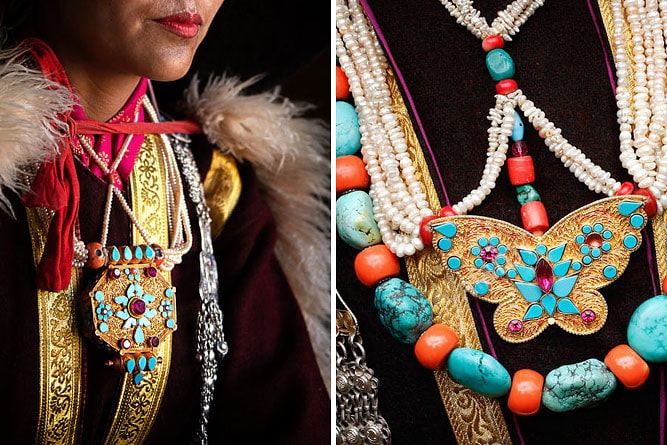
What is Gau?
Gau, pronounced “Kau,” is not just an ornament; it is a cultural emblem that embodies Ladakh’s rich traditions and history. This hexagonal or octagonal amulet, typically the size of a fist, holds a special place in the hearts of Ladakhi women. Crafted meticulously with pure gold, Gau serves as both a decorative piece and a symbol of protection.
Cultural Significance in Ladakhi Traditions
For centuries, Gau has been cherished as a talisman that safeguards the wearer from evil spirits. It represents prosperity, blessings, and spiritual strength. Passed down as heirlooms, these amulets carry familial stories and cultural pride.

The Intricate Craftsmanship of Gau
Materials Used in Gau
Gau is traditionally made from pure gold, symbolizing wealth and divine protection. Its surface often features fine nakashi (engraving) with intricate floral or geometric patterns, representing the delicate artistry of Ladakhi craftsmen.
Nakashi – The Art of Engraving
The fine engraving on Gau showcases the extraordinary skills of Ladakhi artisans. Each piece is a masterpiece, with every line and curve telling a story of devotion and craftsmanship.
Embellishments with Precious Stones
To enhance its beauty, Gau is adorned with turquoise, coral, and pearls. These gemstones not only add visual allure but also hold cultural and spiritual significance, believed to attract positive energy.
The Unique Variants of Gau
Exploring the Pema-lab-tse Design
One of the most celebrated versions of Gau is the Pema-lab-tse, which draws inspiration from the butterfly. This variant is a testament to Ladakhi women’s grace and aesthetic values.
The Butterfly Inspiration Behind Pema-lab-tse
The butterfly design of Pema-lab-tse signifies transformation, beauty, and delicacy. It mirrors the wearer’s femininity and connection with nature.
Feminine and Delicate Symbolism
Pema-lab-tse is more than just an ornament; it is a poetic expression of womanhood, reflecting Ladakhi women’s strength and elegance.

Gau as a Symbol of Protection and Prosperity
Spiritual Significance
Gau is often considered a talisman that protects the wearer from harm. It is believed to carry blessings from ancestors and spiritual entities.
Gau as a Heirloom
These amulets are passed down through generations, making them priceless treasures that connect families to their heritage.
The Evolution of Gau Through the Ages
Traditional Uses of Gau in Ladakh
Historically, Gau was not just an ornament but also a spiritual tool. It was used during prayers and rituals, symbolizing divine protection and blessings.
Contemporary Relevance and Modern Adaptations
While retaining its traditional essence, Gau has found its place in modern jewelry collections. Designers now incorporate contemporary elements to make it versatile for modern wardrobes.
Gau in Ladakhi Weddings and Ceremonies
Ritualistic Importance of Gau
In Ladakhi weddings, Gau holds immense significance. It is gifted to brides as a token of blessings, prosperity, and protection for their new life.
Gau as a Gift of Blessings
The exchange of Gau during ceremonies strengthens familial bonds and represents the continuity of cultural traditions.

Gau’s Place in the Modern Jewelry World
A Blend of Tradition and Fashion
Gau seamlessly merges tradition with modern aesthetics. It appeals to those who value heritage while embracing contemporary fashion trends.
Why Gau is Still Revered
Despite changing times, Gau remains a symbol of cultural pride. Its timeless design and profound meaning ensure its continued relevance in Ladakhi and global jewelry landscapes.
Conclusion: Gau – A Treasure Beyond Time
Gau is more than a piece of jewelry; it is a cultural artifact that bridges the past and present. Whether in its traditional form or modern adaptations, Gau continues to captivate hearts with its intricate designs and deep significance. It is a timeless testament to Ladakhi artistry, spirituality, and beauty.
FAQs
What makes Gau unique compared to other traditional ornaments?
Gau stands out due to its blend of artistry, spirituality, and cultural significance, making it more than just an adornment.
How is Pema-lab-tse different from other Gau designs?
Pema-lab-tse features a butterfly-inspired design, symbolizing femininity and delicacy, setting it apart from other variants.
Can Gau still be worn in modern fashion?
Absolutely! Gau’s timeless appeal makes it a versatile accessory that complements both traditional and contemporary outfits.
What materials were historically used to craft Gau?
Gau was traditionally made from pure gold and adorned with gemstones like turquoise, coral, and pearls.
Is Gau exclusively worn by women in Ladakh?
While primarily associated with women, Gau’s spiritual significance makes it a treasured item across genders in specific Ladakhi traditions.